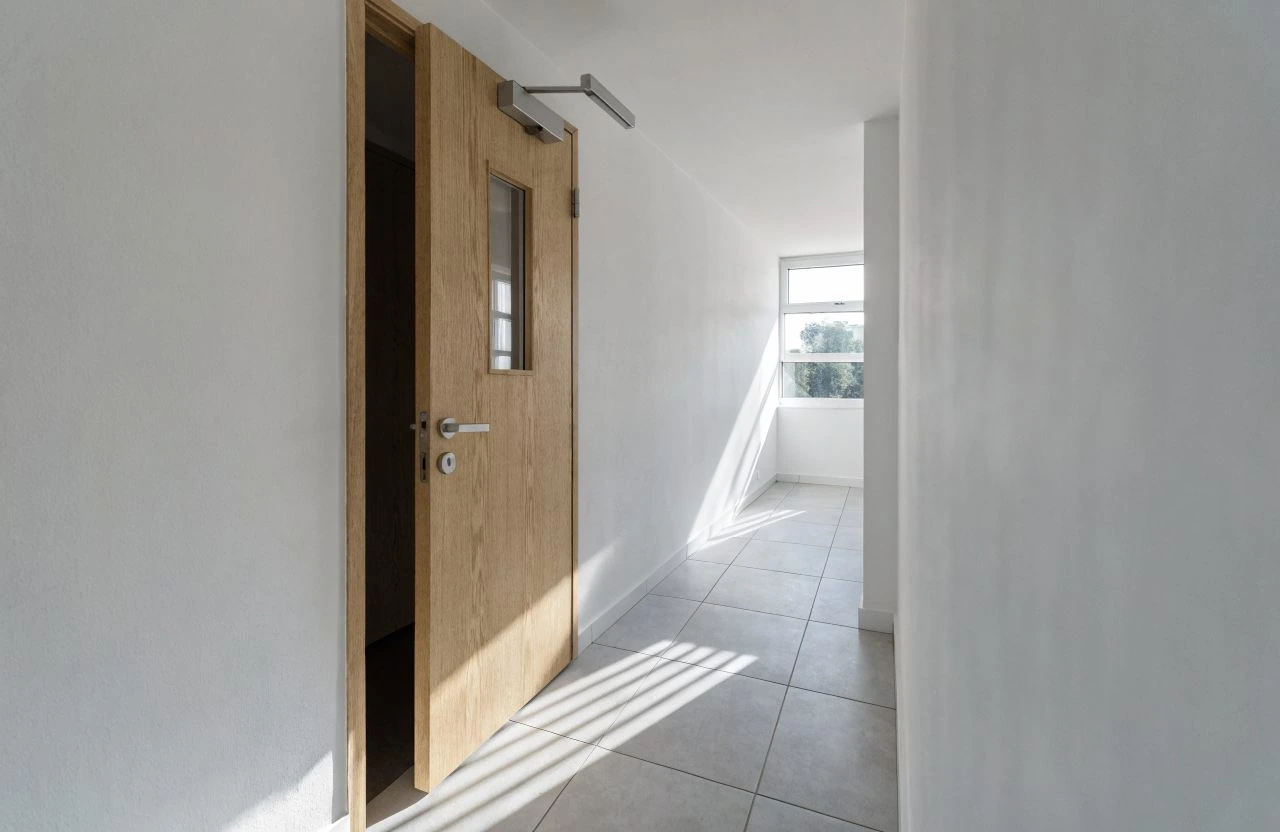
How often do fire doors need to be inspected?
Under the Fire Safety (England) Regulations 2022, residential buildings over 11 metres need quarterly checks of fire doors in communal areas and annual checks of flat entrance doors on a best-endeavours basis. For HMOs, workplaces and lower-rise blocks, six-monthly inspection is widely accepted good practice. We run scheduled quarterly and annual inspection programmes so nothing is missed.
What is the difference between FD30 and FD60 fire doors?
FD30 doors resist fire for a minimum of 30 minutes and are the standard for flat entrance doors and most internal escape routes. FD60 doors resist fire for 60 minutes and are typically specified for higher-risk locations such as plant rooms, commercial kitchens and protected stairways in larger buildings. The correct rating comes from the building's fire risk assessment, not guesswork.
Can a fire door be repaired instead of replaced?
Often, yes. Worn intumescent strips and smoke seals, dropped hinges, failed closers, excessive gaps and damaged ironmongery can usually be remedied at a fraction of replacement cost. If the leaf itself is split, delaminated, drilled through or trimmed beyond tolerance, replacement is the only compliant option. We advise honestly either way and record the reasoning in your report.
What documentation do I get after a fire door survey?
Every survey produces a door-by-door condition report with photographs, gap measurements, defects graded by severity, and a costed remedial schedule, written so a landlord or managing agent can drop it straight into their fire safety records as compliance evidence for the Responsible Person under the Fire Safety Order 2005.
Do fire doors need special glass in vision panels?
Yes. Any glazing in a fire door or surrounding screen must be fire-rated to at least the same period as the door, typically ceramic or intumescent-laminated glass, fitted with the correct intumescent glazing system and beading. Standard toughened or wired glass fitted with ordinary beads will fail, and it's one of the most common defects we find on London surveys.
Who is responsible for fire doors in a block of flats?
The Responsible Person under the Regulatory Reform (Fire Safety) Order 2005, usually the freeholder, RMC or managing agent, is responsible for fire doors in communal areas, and since 2023 must also make best endeavours to check flat entrance doors annually in buildings over 11 metres. Leaseholders normally own their front door, which is why clear reporting and access arrangements matter.