Introduction: When a Premium System Stops Performing Like One
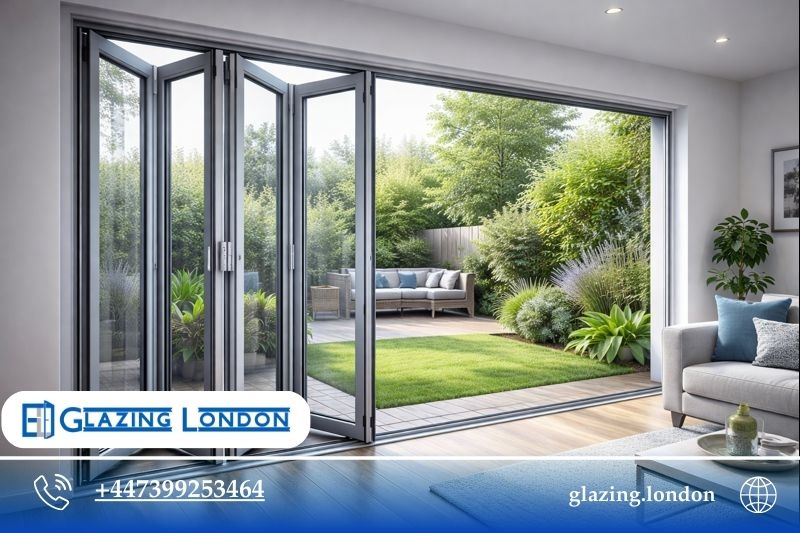
Bi-fold doors are often promoted as a premium architectural feature . They are designed to create seamless transitions between indoor and outdoor spaces , maximise natural light , and provide smooth , effortless operation . Homeowners , landlords , and commercial property owners invest significant sums into bi-fold door systems with the expectation that they will remain reliable for many years .
However , one of the most common service issues we encounter is bi-fold doors that become difficult to operate , noisy , misaligned , or completely unusable . In the vast majority of cases , the root cause is not the frame , the glass , or the locking system—it is the roller mechanism .
Roller failure is one of the most misunderstood problems in bi-fold door systems . Many people assume that stiffness or resistance is “normal wear ,” when in reality it is often an early warning sign of a mechanical issue that will worsen over time .
This article explains:
- Why bi-fold door rollers fail
- The most common warning signs of roller problems
- Why temporary or DIY fixes often make the issue worse
- How we professionally diagnose and repair roller failures
- How to prevent future problems and extend the life of your doors
What Are Bi-Fold Door Rollers and Why Are They So Important?
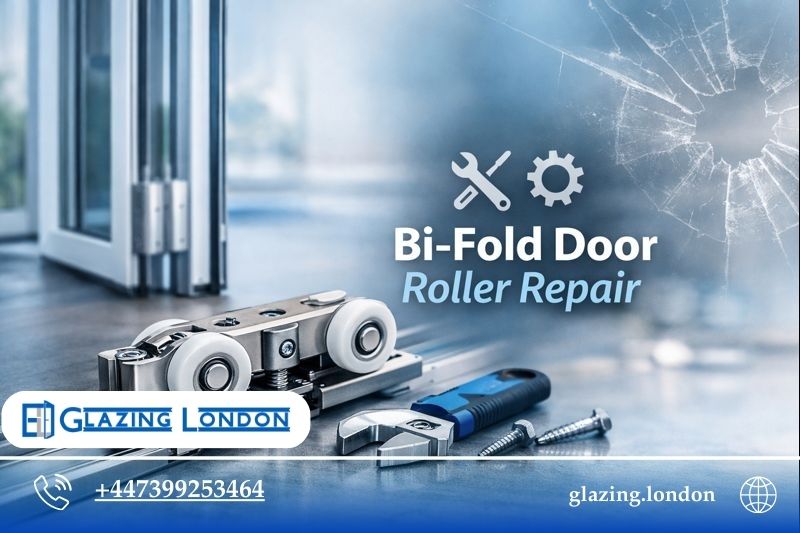
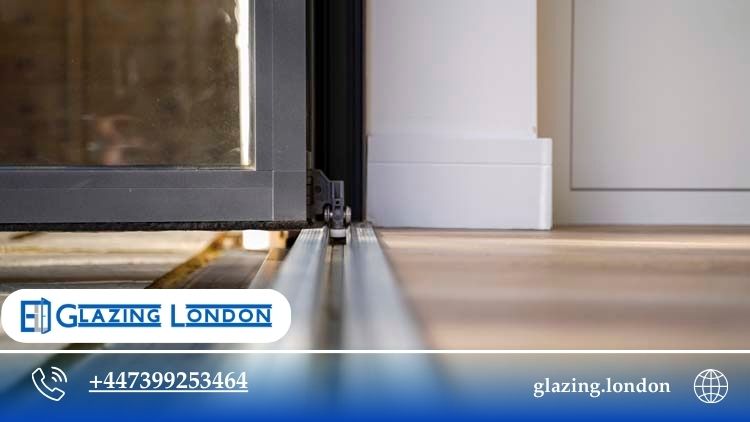
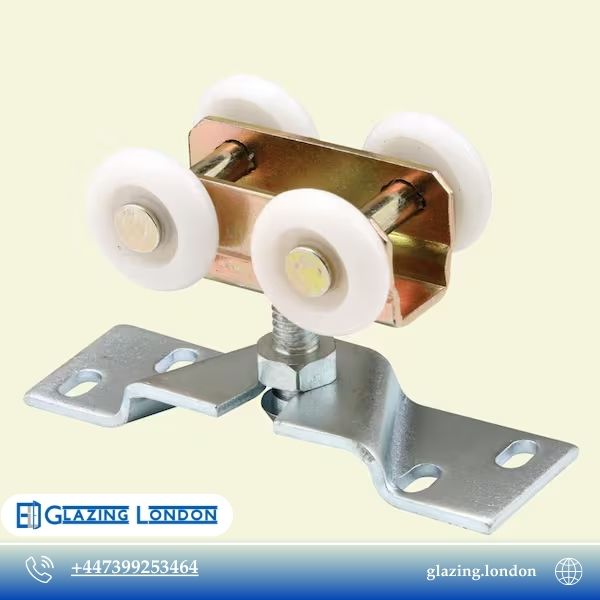
Bi-fold door rollers—also known as running gear or carriages—are the components responsible for carrying the weight of the door panels and allowing them to glide smoothly along the track .
Unlike traditional hinged doors , bi-fold systems rely on precision engineering . The rollers must:
- Support heavy glazed panels
- Maintain perfect alignment across multiple panels
- Distribute weight evenly across the track
- Allow smooth movement with minimal friction
Even a small defect in a roller can affect the entire system . When rollers fail , the door does not simply become “a bit stiff .” Instead , it places stress on the track , frame , hinges , and locking points , often leading to far more expensive repairs if left unresolved .
Double Glazing Door Repair London
Double Glazing London
Why Bi-Fold Door Rollers Fail: The Real Causes
Roller failure rarely happens suddenly . It is usually the result of gradual mechanical stress combined with environmental factors and installation issues . Below are the most common causes we see .
1 . Excessive Weight and Overloading
Modern bi-fold doors are larger and heavier than ever before . Larger glass panels , thicker glazing , and higher thermal specifications all increase the overall load placed on the rollers .
Common causes of overloading include:
- Upgrading from double glazing to triple glazing
- Increasing panel size during renovations
- Installing additional glass without upgrading roller capacity
- Using rollers rated for lighter systems
When rollers are forced to carry more weight than they were designed for , internal components such as bearings begin to deform . This damage may not be visible from the outside , but it gradually compromises performance .
Over time , the door becomes harder to move , alignment shifts , and eventually the rollers fail completely .
2 . Poor or Incorrect Installation
One of the most overlooked causes of roller failure is poor installation . Even high-quality bi-fold doors can fail prematurely if they are not installed correctly .
Typical installation problems include:
- Tracks that are not perfectly level
- Incorrect roller height adjustment
- Inadequate structural support beneath the threshold
- Failure to allow for building movement or settlement
Bi-fold door rollers are engineered to roll smoothly along a straight , level path . When the track is even slightly out of alignment , the rollers are forced to compensate by absorbing lateral stress—something they are not designed to do .
This additional stress accelerates bearing wear and dramatically shortens the lifespan of the rollers .
3 . Dirt , Debris , and Contaminants in the Track
Rollers operate close to ground level , which makes them highly vulnerable to dirt and debris . Dust , grit , sand , leaves , and construction residue can all accumulate in the track .
As debris builds up:
- Rollers are forced to roll over abrasive particles
- Bearings become contaminated
- Wheels begin to slide rather than roll smoothly
Many homeowners attempt to solve this by applying lubricant . While lubrication may temporarily reduce noise , it often traps dirt inside the mechanism , worsening the long-term damage .
4 . Moisture , Water Ingress , and Corrosion
Water exposure is another major contributor to roller failure . Even rollers made from corrosion-resistant materials can fail if water regularly enters the system .
Common causes include:
- Blocked drainage channels
- Poor external sealing
- Pressure washing the threshold area
- Condensation build-up
Once moisture reaches the internal bearings , corrosion can begin . This often leads to grinding noises , uneven movement , and eventual seizure of the roller .
5 . Lack of Maintenance and Inspection
Bi-fold doors are often marketed as low-maintenance , but this does not mean maintenance-free . Like any mechanical system , rollers require periodic inspection .
Without maintenance:
- Early signs of bearing wear go unnoticed
- Minor alignment issues become major faults
- Small defects escalate into complete failure
In many cases , timely inspection could have prevented the need for replacement .
French Doors Repair in London
Door Installation in London
Early Warning Signs of Roller Failure
Recognising early warning signs can save significant time and money . The most common indicators include:
- Increased resistance when opening or closing
- Grinding , clicking , or scraping noises
- Panels dropping or dragging
- Doors no longer closing evenly
- Locking points becoming difficult to engage
If any of these symptoms are present , the rollers are already under stress .
Why DIY Fixes Usually Fail
Many property owners attempt to fix roller problems themselves . Common DIY approaches include lubricating the track , tightening adjustment bolts , or forcing the door back into alignment .
Unfortunately , these methods often mask the symptoms rather than address the root cause . In some cases , they accelerate damage by placing additional strain on already weakened components .
Roller mechanisms require precise load balancing and calibration . Without specialist tools and experience , it is very easy to make the problem worse .
Sliding Patio Door Repair London
Bifold Door Installation London
Our Professional Bi-Fold Door Roller Repair Process
Our approach focuses on correcting the underlying cause of failure , not just improving short-term performance .
Step 1: Detailed Assessment
We assess panel weight , track condition , alignment , and roller wear patterns to identify the true cause of failure .
Step 2: Controlled Load Release
Panels are carefully offloaded to relieve stress on the rollers without damaging the frame or track .
Step 3: Roller Inspection
Each roller is evaluated to determine whether it can be repaired or must be replaced .
Step 4: Precision Repair or Replacement
We use load-rated , system-compatible rollers to ensure long-term reliability .
Step 5: Calibration and Testing
Stable Door Repair in London
The system is recalibrated and tested through multiple cycles to confirm smooth operation , correct alignment , and proper sealing .
Bifold Door Repair London
Repair vs Replacement: Making the Right Decision
Not every roller issue requires full replacement . In many cases , early intervention allows for repair or partial replacement , saving significant costs .
Replacement is typically required when:
- Bearings are seized or heavily corroded
- Wheels are deformed
- Multiple rollers have failed due to overload
Our goal is always to provide the most cost-effective and durable solution .
Why Roller Failures Are So Common in Urban Properties
Urban properties experience higher usage rates , heavier doors , and more environmental exposure . Extensions , shopfronts , and commercial spaces place constant demand on bi-fold systems .
This makes professional servicing especially important in high-use environments .
Composite Door Repair in London
How to Extend the Life of Your Bi-Fold Door Rollers
To maximise roller lifespan:
- Keep tracks clean and dry
- Avoid pressure washing thresholds
- Address stiffness immediately
- Schedule periodic inspections
- Use only manufacturer-approved components
With proper care , bi-fold door rollers can last well over a decade .
Front Door Repair London
Final Thoughts: Fix the Cause , Not the Symptom
Bi-fold door roller failure is not inevitable . It is usually the result of identifiable and preventable factors .
By addressing issues early and using professional repair methods , most systems can be restored to smooth , reliable operation without replacing the entire door .