Introduction: The Shopfront Is No Longer Architecture — It Is Strategy
In 2025 , shopfront glass design in London has evolved far beyond a construction or architectural decision . For modern retailers , the shopfront has become a strategic marketing interface—a physical touchpoint where branding , psychology , technology , sustainability , and customer experience converge .
London is one of the most saturated retail markets globally . High rent costs , intense brand competition , hybrid shopping behaviour (online + offline) , and increasingly selective consumers mean that first impressions are no longer optional—they are decisive . Research consistently shows that a customer forms an opinion about a retail space within seconds , often before consciously registering it . The shopfront glass is the very first layer of that experience .
Retailers who continue to treat shopfront glazing as a basic requirement rather than a strategic investment are quietly losing footfall , brand authority , and conversion opportunities . Conversely , those who align their glass design with modern consumer expectations are gaining a measurable competitive edge .
This article explores , in depth , the shopfront glass design trends London retailers are actively using in 2025 , why these trends exist , how they influence buying behaviour , and how they should be leveraged as part of a broader content and brand strategy .
Double Glazing London
The Strategic Role of Shopfront Glass in Modern Retail
Before examining individual trends , it is essential to understand why shopfront glass has become so commercially significant .
In 2025 , a retail shopfront must perform at least five roles simultaneously:
- Brand Translator
The shopfront communicates brand values instantly—luxury , accessibility , innovation , sustainability , or exclusivity . - Traffic Filter
It attracts the right customers and discourages the wrong ones , reducing friction inside the store . - Conversion Trigger
Visual openness and product clarity directly influence walk-in decisions . - Marketing Surface
Glass is now a medium for messaging , storytelling , and digital integration . - Operational Shield
Security , thermal efficiency , acoustic control , and compliance are no longer negotiable .
Modern shopfront glass solutions must therefore balance aesthetics , performance , regulation , and psychology—a balance that defines the trends shaping 2025 .
Door Installation in London
Double Glazing Door Installation in London
Trend 1: Frameless Structural Glass as a Conversion Tool
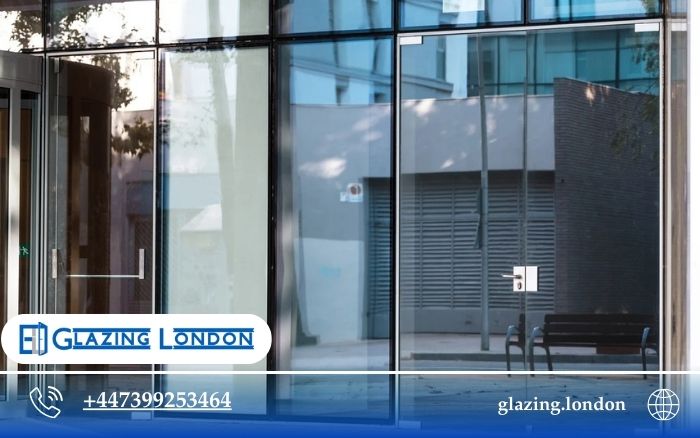
Frameless shopfront glass is no longer a design luxury—it is a conversion-driven choice .
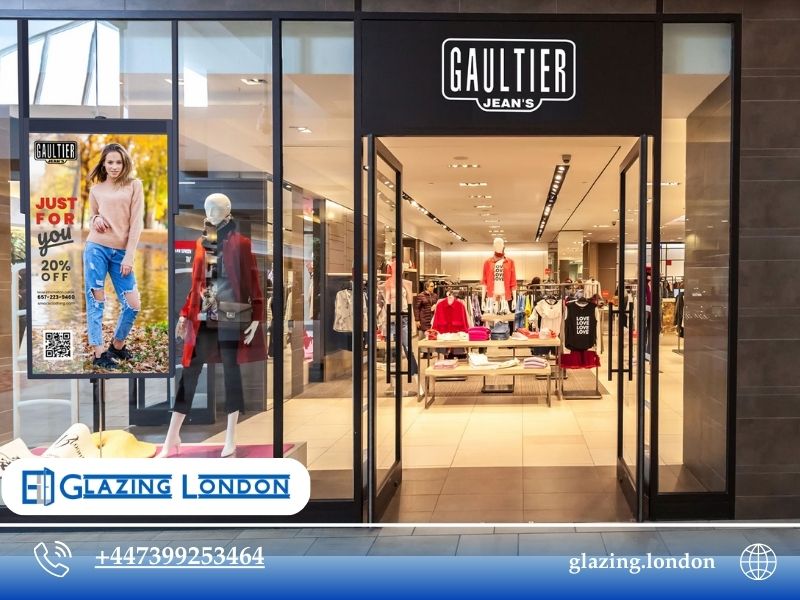
London retailers increasingly understand that visual friction kills curiosity . Every visible mullion , thick frame , or obstruction between the street and the interior subtly discourages engagement . Frameless structural glass removes these barriers , allowing the store interior to visually extend onto the pavement .
Why This Trend Dominates in 2025
Several forces have accelerated the adoption of frameless shopfronts:
- Improved structural glazing technology
- Enhanced laminated safety glass standards
- Higher tolerance for minimalistic design in planning approvals
- Retailers prioritising visibility over traditional security aesthetics
In practical terms , frameless glass allows:
- Full product visibility
- Clear sightlines deep into the store
- A seamless boundary between public and commercial space
Commercial Impact
Retailers using frameless shopfront glazing consistently report:
- Increased impulse entry
- Higher dwell time
- Improved evening visibility after trading hours
- Stronger brand recall
From a marketing perspective , frameless glass supports passive selling—products sell themselves before a staff member ever engages .
Window installation in London
Trend 2: Ultra-Clear Low-Iron Glass for Brand Accuracy
In 2025 , colour accuracy has become a brand integrity issue .
Standard glass subtly distorts colours through a green tint . While historically tolerated , this distortion is no longer acceptable for brands operating in premium or detail-sensitive sectors .
Why Low-Iron Glass Is Becoming Standard
Luxury retailers , electronics brands , and design-led boutiques are increasingly specifying low-iron ultra-clear glass to ensure that:
- Product colours appear exactly as designed
- Lighting schemes remain accurate
- Materials retain their intended visual texture
For fashion , jewellery , and cosmetics , even minimal colour distortion can subconsciously reduce perceived quality .
Psychological Effect on Customers
Ultra-clear glass creates a sensation of:
- Transparency
- Precision
- Authenticity
- Premium craftsmanship
These cues directly influence trust formation , particularly for high-value purchases .
uPVC Windows installation in London
Trend 3: Smart Glass and Dynamic Transparency
Smart glass—once considered experimental—is now firmly embedded in London’s retail landscape .
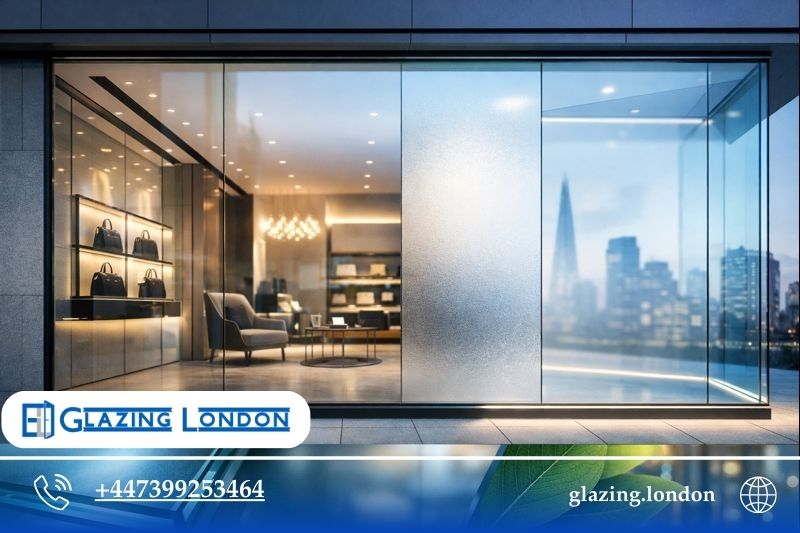
In 2025 , switchable glass technologies allow retailers to control transparency , light diffusion , and privacy instantly and dynamically .
Practical Retail Applications
Retailers use smart glass to:
- Transition from open daytime trading to branded evening displays
- Host private events without physical blinds or shutters
- Reduce glare while maintaining daylight
- Transform shopfronts into digital canvases
Strategic Advantage
Smart glass allows the shopfront to adapt throughout the day without structural changes . This adaptability is especially valuable in London’s mixed-use retail zones , where a shop may need to serve multiple functions within a single trading cycle .
From a marketing lens , smart glass enables:
- Event-based branding
- Time-sensitive promotions
- Visual storytelling without permanent signage
Double Glazing Window Installation in London
Trend 4: Sustainability-Driven Glazing Decisions
Sustainability is no longer a moral signal—it is a commercial expectation .
In 2025 , London retailers face growing pressure from:
- Consumers
- Local councils
- Investors
- Landlords
As a result , shopfront glass design increasingly prioritises energy efficiency and environmental performance .
Key Sustainable Glazing Features
Retailers are adopting:
- Low-emissivity (Low-E) coatings
- Solar control glass
- Thermally efficient framing systems
- Double or triple glazing configurations
These solutions reduce:
- Heat loss in winter
- Solar gain in summer
- HVAC operating costs
Brand & Marketing Implications
Retailers actively communicate sustainable upgrades through:
- Website content
- In-store signage
- PR releases
- Google Business profiles
Sustainability is now a conversion enhancer , not just a compliance requirement .
Trend 5: Acoustic Control for Experience-Led Retail
Noise pollution remains one of London’s most underestimated retail challenges .
High-street traffic , construction , and pedestrian flow can significantly degrade the in-store experience . In 2025 , acoustic laminated glass has become standard for retailers who value experience-driven selling .
Why Acoustic Glass Matters
Lower noise levels:
- Increase customer comfort
- Encourage longer browsing
- Improve staff wellbeing
- Support premium brand positioning
For retailers offering consultations , fittings , or services , acoustic control directly impacts perceived professionalism .
Trend 6: Slimline Framing and Industrial Minimalism
While frameless glass dominates , framing has not disappeared—it has evolved .
Slimline aluminium and steel frames , often in matte black or dark bronze , are widely used to:
- Add visual structure
- Frame displays intentionally
- Reinforce industrial or modern brand identities
Why This Works in London
London’s architectural landscape blends heritage with modernity . Slimline framing respects this balance by:
- Providing definition without heaviness
- Complementing both period and contemporary buildings
- Allowing flexibility in signage integration
emergency glazing
Trend 7: Invisible Security as Standard Practice
Security expectations in London retail have shifted dramatically .
Retailers in 2025 demand high security without visual aggression . Traditional shutters and bars undermine brand perception and deter customers .
Modern Security Solutions
Advanced laminated security glass now offers:
- Impact resistance
- Anti-intrusion performance
- Shatter containment
All without compromising transparency or design integrity .
Security is now embedded into the glass itself—not layered on top .
Trend 8: Shopfront Glass as a Digital Marketing Asset
Perhaps the most transformative trend is the integration of glass into omnichannel marketing strategies .
Retailers increasingly treat shopfront glass as:
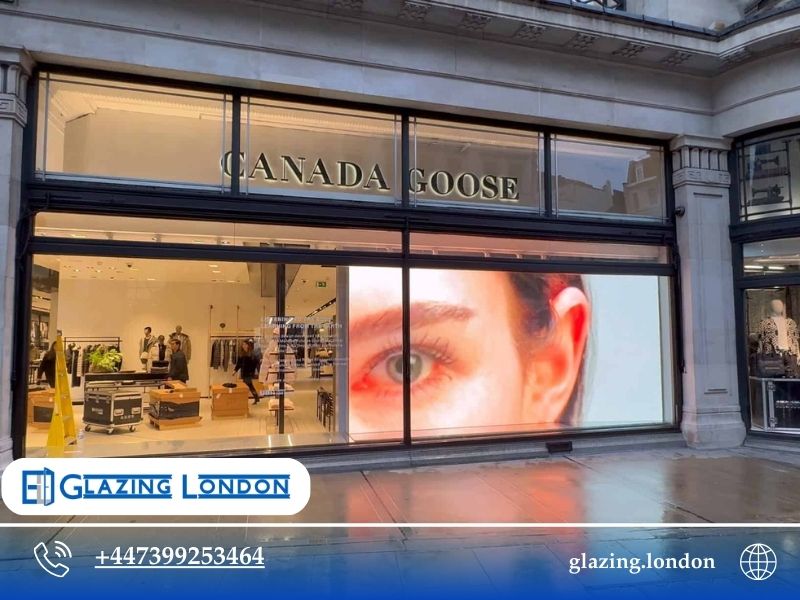
- A content surface
- A brand storytelling medium
- A social-media amplification tool
Projection , internal LED illumination , and subtle digital overlays allow the shopfront to communicate without clutter .
The result is a façade that:
- Changes over time
- Responds to campaigns
- Encourages photography and sharing
The Local SEO Effect of Modern Shopfront Design
An often-overlooked benefit of upgraded shopfront glazing is its impact on local search performance .
Retailers with visually striking shopfronts experience:
- More customer photos on Google Maps
- Higher engagement rates
- Improved brand recognition
- Increased branded search queries
In competitive London boroughs , these signals directly influence visibility and foot traffic .
Why Professional Glazing Strategy Matters More Than Ever
In 2025 , the difference between an average and a high-performing retail space often lies not in product quality—but in presentation strategy .
Professional glazing specialists bring:
- Regulatory expertise
- Design-led thinking
- Performance optimisation
- Long-term ROI planning
Retailers who involve glazing professionals early in the design or refurbishment process achieve significantly better outcomes than those who treat glazing as a final step .
Final Perspective: Shopfront Glass as Silent Sales Infrastructure
The defining insight of 2025 is simple:
Shopfront glass is no longer passive architecture—it is silent sales infrastructure .
Retailers who invest strategically in shopfront glass design benefit from:
- Higher footfall quality
- Stronger brand positioning
- Improved operational efficiency
- Better online and offline performance alignment
In a city as competitive as London , these advantages are no longer optional—they are decisive .