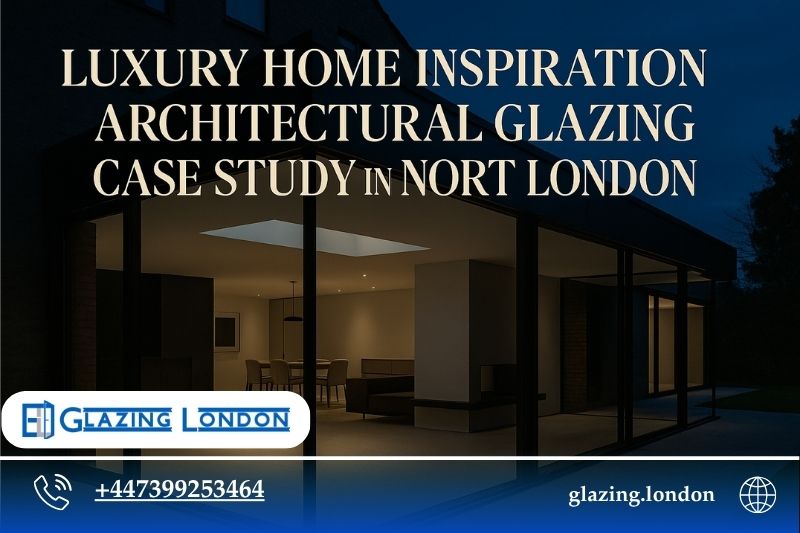
How a single glazing decision turned an ordinary house into a breathtaking architectural residence .
Introduction: When Light Becomes a Design Material
There are renovation projects , and then there are transformations .
In North London , a family purchased a traditional brick detached home — charming from the outside , but dark and boxed-in inside . The house had been extended multiple times by previous owners , resulting in a layout that felt heavy , compartmentalised , and disconnected from the garden . The family wanted a home that inspired creativity , connection , and a sense of freedom .
They didn’t just want a renovation .
They wanted a re-imagining .
Instead of choosing new furniture , repainting walls , or adding decorative elements , they decided to approach the transformation differently:
They would rebuild the house around natural light .
The material that made this dream possible?
Architectural glazing .
And not just any glazing — a curated combination of minimal-frame sliding doors , structural glass walls , roof glazing , corner glazing , and a floating internal glass bridge that connects the first floor to a new mezzanine gallery .
This is the story of how glass changed everything .
Secondary glazing London
Chapter 1: Understanding the Vision
When the family first walked the property with the architect , they used phrases like:
“Airy .”
“Peaceful .”
“Feeling connected to the outside .”
“Something that feels like a boutique hotel .”
The architect responded not by sketching walls — but by sketching voids .
He asked a simple but powerful question:
“What if the walls didn’t exist anymore?”
For most homeowners , that idea is intimidating . Walls feel safe . They define rooms . They hold up art . They create privacy . But the architect challenged the owners to imagine a house where the boundaries were invisible — not removed , but replaced with something that felt both light and protective .
That material was glass .
Not fragile .
Not cold .
Not industrial .
But warm , structural , luxurious architectural glazing .
In high-end residential design across Europe — particularly in Scandinavia — glazing is more than a window . It becomes a framing device for the outside world . Architects use glass to curate the view , almost like an art piece . Instead of hanging paintings , they turn what’s outside into the artwork .
For this North London family , the vision became clear:
The garden would no longer be a backyard . It would be a living backdrop .
Door Installation in London
Chapter 2: The Challenge
The biggest challenge wasn’t the design — it was the property itself . The house sat on a narrow plot , with neighbours on both sides and limited natural light entering the rear . Most London homes built in the mid-20th century have the same problem: lots of structure , very little light .
There was also one more complication:
The rear load-bearing wall could not be fully removed without structural reinforcement . This meant the glazing solution had to be integrated into the core of the house , not just “placed” in front of it .
For glazing companies that operate in the premium residential market , this is where real expertise comes in . Anyone can sell windows . Architectural glazing , however , is something different . It needs engineering . Structural calculations . Product knowledge . Waterproofing expertise . Thermal performance optimisation .
The homeowner didn’t need “glass .”
They needed a solution that replaced architecture itself .
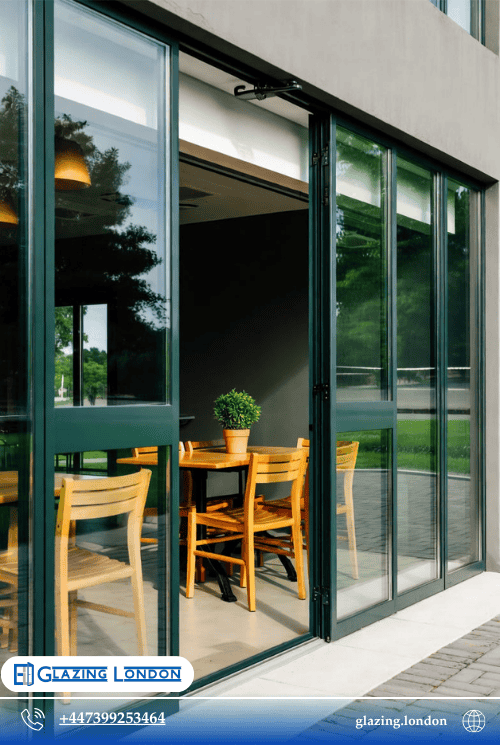
Bifold Door Installation London
Chapter 3: The Design Strategy
The design strategy centered on one principle:
The flow of light should guide the flow of movement .
The architect developed a glazing plan in four layers:
- Create connection to the outdoors .
- Extend the ceiling line visually with skylights .
- Break one interior wall and replace it with internal glazing .
- Use invisible framing to remove visual boundaries .
Instead of focusing on “open plan ,” the focus shifted to “open visuality” — a subtle but important difference . The goal wasn’t to make one huge empty space , but to allow separate areas to be linked through transparency .
Each glazing element was chosen with a purpose .
Composite Door Installation in London
Chapter 4: The Centerpiece — A Minimal-Frame Sliding Glass Wall
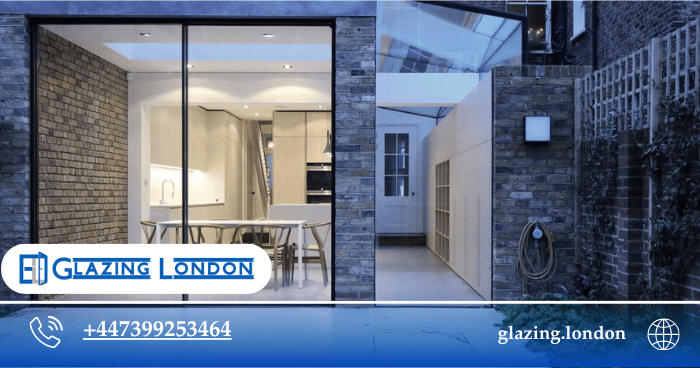
The first and most dramatic glazing decision was the installation of an eight-meter minimal-frame sliding glass system along the entire rear of the house . The system creates an uninterrupted , floor-to-ceiling opening that collapses into a single hidden pocket when open . When closed , the frame is so thin that it becomes nearly invisible .
The homeowners explained the first moment they saw it installed:
“It was like someone removed the end of the house .”
From the living room , the eye no longer ends at a solid wall . It continues into the garden , across the lawn , and up into the sky . When the sliding panes are open , the living space and garden become one continuous surface .
Suddenly the house didn’t just have “an outside .”
It had a horizon .
This is the power of minimal-frame sliding glazing .
It erases boundaries .
Front Door Installation London
Chapter 5: The Roof Transformation — A Large Fixed Rooflight
Once the rear wall became glass , the roof became the next frontier .
The architect placed a massive rectangular rooflight above the newly created kitchen mezzanine area , directly over the dining table . The effect changed everything . Instead of artificial ceiling lighting , the dining area is now illuminated by natural daylight that shifts throughout the day . Morning light washes across the island . By afternoon , the glass captures the warmth of the sunset .
The homeowner said something unforgettable:
“It feels like we eat under the sky .”
Luxury isn’t about expensive things .
It’s about experience .
Stable Door Installation London
Chapter 6: The Hidden Genius — Structural Glass Corners
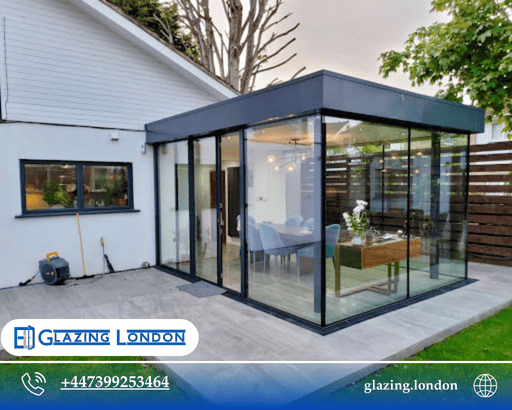
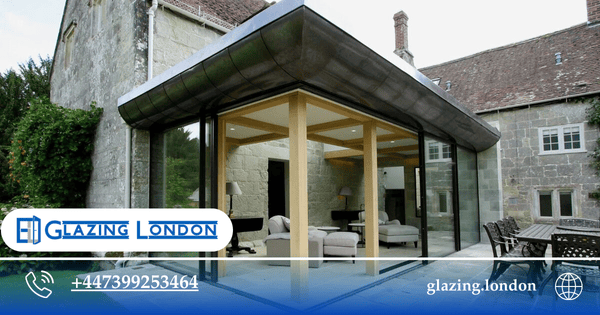
In the far-left corner of the extension , the design team wanted to eliminate support posts . The idea was to create a “floating edge ,” where two panes of glass meet at a perfect right angle , with no visible frame and no column .
This technique is called structural corner glazing , and it’s a hallmark of high-end architectural glazing .
With this single decision , the extension suddenly had:
- A panoramic view
- A feeling of openness
- A sculptural architectural element
Visitors don’t notice the detail immediately — they just feel the space is unusually open . That’s the beauty of structural glazing: when done well , it disappears .
Sliding Patio Door Installation London
Chapter 7: The Signature Touch — The Internal Glass Bridge
The homeowners wanted the first floor to feel just as open as the ground level . Instead of a traditional hallway , the architect proposed a glass bridge . This bridge connects the staircase landing to a private reading alcove overlooking the garden .
Walking across it feels like floating .
The glass bridge also allows light from the skylight to drop down into the ground floor . The house now pulls daylight from above and views from below , creating a three-dimensional relationship between floors .
Guests always ask the same question:
“How is this even possible?”
Architectural glazing isn’t just functional .
It’s emotional .
Chapter 8: The Financial Impact — Light Adds Value
The homeowners didn’t choose glazing only for aesthetics . They understood its effect on property value . London estate agents estimate that:
Homes with premium architectural glazing sell faster and command higher offers .
Light is luxury .
Space that feels expansive sells .
The clarity of the sight lines , the connection between inside and outside , and the seamless transition to the garden all contribute to creating a home that feels significantly larger than its footprint .
Architectural glazing doesn’t add square meters .
It adds perceived square meters — which increases value .
French doors installation London
Chapter 9: The Brand Perspective — What Glazing Companies Learn from This Project
For glazing companies offering premium architectural systems , this case study illustrates what differentiates a luxury glazing provider from a regular window supplier .
Selling windows is a transaction .
Delivering architectural glazing is a transformation .
The client is not buying glass .
They are buying:
Vision .
Emotion .
Luxury .
Light .
The glazing company that worked on this project was chosen because they understood one truth:
Homeowners don’t buy glazing . They buy a lifestyle .
Chapter 10: The Final Result — A House That Feels Alive
Today , when you walk into the home , the first sensation isn’t visual .
It’s emotional .
The house feels calm .
The space feels open .
Time feels slower .
On summer evenings , the sliding wall disappears and the sound of the garden blends with the ambience of the living room . In winter , the warm interior lighting glows through the glazing , giving the home a soft Scandinavian warmth .
Architectural glazing didn’t just brighten the house .
It elevated it .
Double Glazing Door Installation in London
Conclusion: Glass Can Change Your Life
Architectural glazing is not about windows .
Window installation in London
It’s about what windows allow you to feel .
When glazing is used with intention:
Walls disappear .
Boundaries dissolve .
Life opens up .
For this North London family , glazing transformed their house into a home that inspires them every single day . Their living room is brighter . Their kitchen is livelier . The house finally matches the lifestyle they dreamed of .
Luxury isn’t something you add .
Luxury is something you reveal .
And sometimes , all it takes is glass .