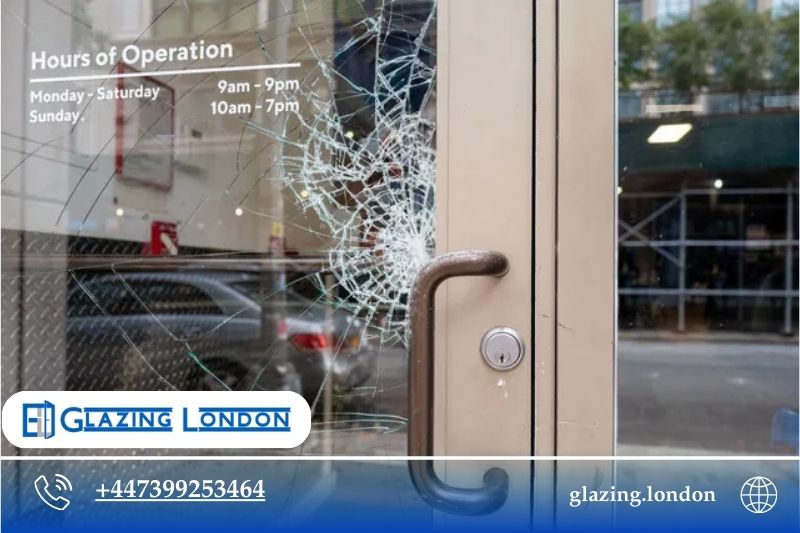
Introduction: The Hidden Cost Behind a “Simple” Broken Door Glass
When door glass breaks—whether due to impact , thermal stress , vandalism , or long-term wear—most homeowners and landlords face the same immediate question: Should I repair the glass or replace the entire unit?
At first glance , repair often looks cheaper . A quick fix , lower upfront cost , and minimal disruption . However , when evaluated through a long-term cost lens , the answer is rarely that straightforward .
This article provides a realistic , cost-based comparison between door glass repair and door glass replacement , focusing on:
- True lifetime costs
- Energy efficiency impact
- Security and compliance risks
- Property value implications
- Typical London housing scenarios
The goal is not to push the most expensive option—but to identify what is genuinely cheaper over time , not just today .
Glazing London
Understanding the Two Options Clearly
What “Door Glass Repair” Actually Means
Door glass repair usually involves:
- Sealing or stabilising cracks
- Replacing a single glass pane within an existing frame
- Applying safety films or temporary reinforcements
- Fixing seals or gaskets around intact glass
Repairs are most common when:
- Damage is minor or localised
- The door frame is still structurally sound
- The glass is single-pane or older double glazing
What “Door Glass Replacement” Involves
Replacement typically means:
- Full removal of the damaged glass unit
- Installation of a new sealed unit (double or triple glazed)
- Upgrade to laminated or toughened safety glass
- Often includes new seals , spacers , and thermal barriers
Replacement is more comprehensive—and initially more expensive—but it resets the lifecycle of the door glass .
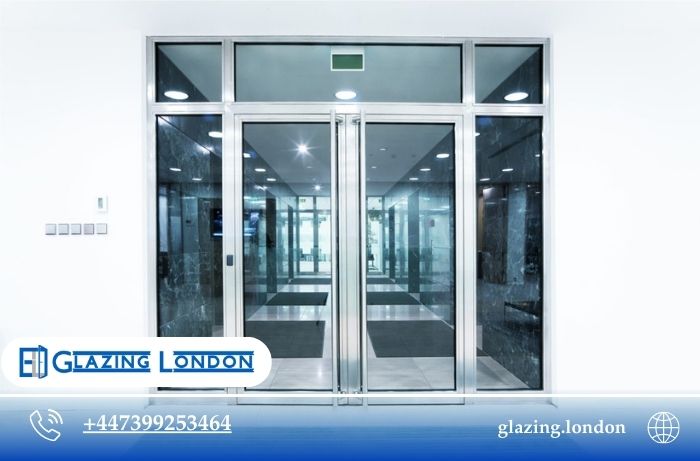
Glass Replacement in London
Upfront Cost Comparison (Short-Term View)
| Option | Typical Cost Range (London) | Time Required |
| Glass Repair | £90 – £220 | Same day |
| Partial Replacement | £250 – £450 | 1–3 days |
| Full Door Glass Replacement | £450 – £900+ | 2–5 days |
On paper , repair wins . This is why many property owners default to it—especially during emergencies .
But upfront cost is only one variable .
Doors Repair in London
Long-Term Cost Factors Most People Ignore
1 . Energy Efficiency Loss
Repaired glass—especially older units—often suffers from:
- Compromised seals
- Gas leakage (argon/krypton loss)
- Reduced U-values
Over time , this leads to:
- Higher heating bills
- Cold draughts
- Condensation build-up
A replaced modern unit can reduce heat loss by up to 40% compared to repaired legacy glass .
Over 5–10 years , energy loss alone can exceed the original replacement cost .
2 . Repeat Failure Risk
A repaired glass panel carries structural memory of damage:
- Micro-fractures expand with temperature changes
- Old frames stress new repairs
- UV exposure weakens patch areas
Statistically:
- Repaired door glass has a 2–3x higher failure rate within 3–5 years
- Replacement units typically last 15–25 years
This means:
One repair today often becomes two repairs tomorrow .
3 . Security & Insurance Implications
Insurance companies increasingly scrutinise:
- Glass safety rating (toughened vs laminated)
- Compliance with modern building standards
- Evidence of “temporary fixes”
In many UK policies:
- Repaired glass may reduce claim eligibility
- Non-compliant glass can invalidate burglary claims
Replacement with laminated safety glass:
- Improves break-in resistance
- Reduces liability for landlords
- Meets modern compliance expectations
4 . Property Value & Aesthetics
Visible repairs:
- Reduce kerb appeal
- Signal deferred maintenance
- Raise buyer or tenant concerns
In contrast:
- New glass panels modernise the entrance
- Increase perceived security
- Support higher rental value
For landlords and sellers , replacement often pays back indirectly .
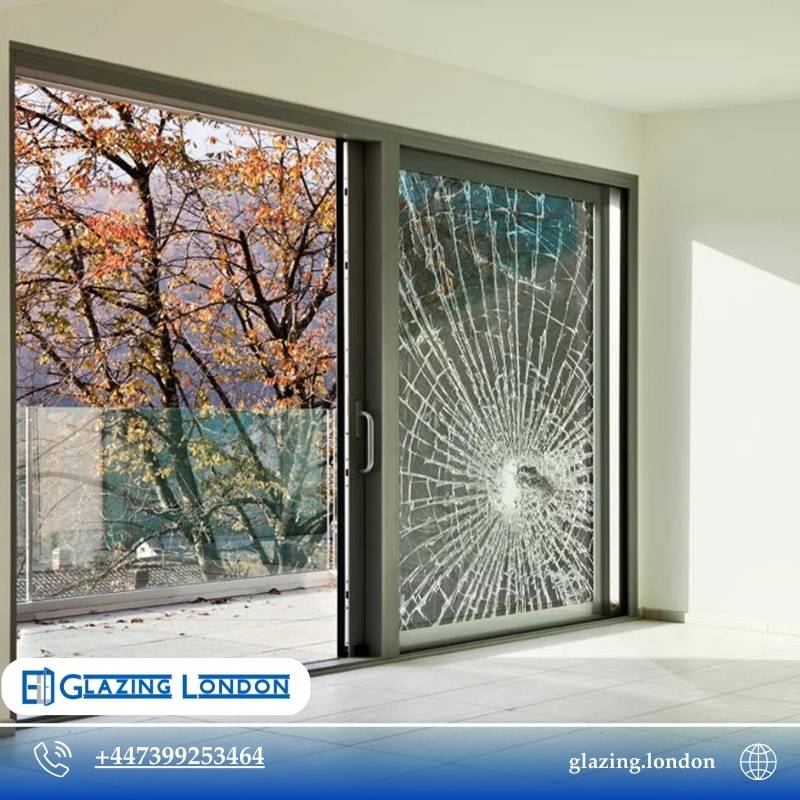
Bifold Door Repair London
The Psychological Trap of “Cheaper Now”
One of the biggest decision-making errors property owners make is anchoring bias—focusing only on the first visible number . When a contractor says , “We can repair it today for £120 ,” the mind immediately locks onto that figure as the right choice .
However , long-term cost decisions—especially in building components like glazing—rarely align with psychological comfort . Door glass is not a consumable item; it is a structural , thermal , and security component . Treating it as a short-term fixable issue often leads to cost stacking , where multiple small expenses silently exceed one correct decision made earlier .
In practice , many London homeowners who initially choose repair later admit that the decision was driven by urgency , not economics .
Composite Door Repair in London
How Inflation Changes the Equation Over Time
A factor almost never discussed in door glass decisions is future cost inflation .
Labour costs in London glazing services have risen steadily due to:
- Skilled labour shortages
- Increased insurance and compliance costs
- Higher material transportation expenses
This means:
- A £150 repair today could cost £220 in three years
- A £450 replacement today could cost £650–£700 later
From a financial planning perspective , locking in a full replacement earlier hedges against inflation , while repeated repairs expose you to compounding cost increases .
In long-term ownership scenarios , inflation alone can tilt the balance decisively toward replacement .
Repair vs Replacement Through a Landlord’s Lens
For landlords , the decision is rarely just technical—it is operational and legal .
Repaired door glass often leads to:
- Recurrent tenant complaints
- Increased call-outs
- Disputes over “habitability”
- Higher void risk between tenancies
More importantly , landlords face duty of care obligations . If a repaired glass panel later fails and causes injury , the question becomes:
Was the cheapest option also the most reasonable one?
In disputes , courts and insurers frequently evaluate whether a modern replacement would have been the safer , expected solution .
From a risk-management standpoint , replacement is often the cheaper option—even before considering energy or maintenance savings .
Front Door Repair London
Commercial Properties: Why Repair Is Rarely the Right Answer
In commercial environments—shops , offices , mixed-use buildings—the cost logic changes dramatically .
Key factors include:
- Business interruption risk
- Brand image and customer perception
- Compliance with safety glazing standards
- Insurance scrutiny
A visibly repaired door glass panel in a commercial setting can:
- Signal poor maintenance
- Reduce customer confidence
- Increase inspection failures
For this reason , most commercial glazing assessments conclude that replacement is the only economically rational option , even when damage appears minor .
Stable Door Repair in London
Energy Performance Over 10–20 Years
Modern replacement glass units are not just “new”—they are technologically superior .
Compared to older repaired units , modern replacements typically offer:
- Low-E coatings
- Improved gas fills
- Better thermal spacers
- Enhanced acoustic insulation
Over a 15-year period , this translates into:
- Lower heating demand
- More stable indoor temperatures
- Reduced condensation damage to frames and flooring
When energy savings are annualised , many replacements pay for themselves partially or fully before the glass reaches mid-life .
Sliding Patio Door Repair London
Maintenance Cascades: The Hidden Chain Reaction
A compromised glass unit rarely fails alone .
Repaired glass often accelerates:
- Seal degradation
- Frame warping
- Moisture ingress
- Lock alignment issues
This leads to secondary repairs:
- Door adjustment
- Seal replacement
- Frame repairs
Replacement resets the system . Repair prolongs decline .
From a systems perspective , repair treats the symptom , replacement treats the cause .
French Doors Repair in London
Exit Strategy: Selling or Refinancing the Property
When selling or refinancing , surveyors notice glass condition immediately .
Common survey notes include:
- “Evidence of previous glass damage”
- “Reduced thermal performance”
- “Non-standard glazing solution”
These remarks can:
- Trigger price renegotiation
- Delay mortgage approval
- Reduce buyer confidence
A replaced glass unit , by contrast , is invisible in surveys—which is exactly what you want .
The Time Value of Convenience
Cost is not purely financial . Time , stress , and disruption also matter .
Repair often means:
- Multiple appointments
- Repeat inspections
- Future downtime
Replacement usually means:
- One controlled intervention
- Predictable outcome
- Long-term peace of mind
When time and inconvenience are factored in , replacement frequently becomes the lower-cost option in human terms , even if spreadsheets show a narrow difference .
Double Glazing Door Repair London
Strategic Decision Framework (Simple Rule)
To decide correctly , ask three questions:
- Will this glass still be reliable in 5 years?
- Does this solution reduce future risks—or postpone them?
- If costs rise , will I regret delaying replacement?
If any answer causes hesitation , repair is likely the false economy .
Scenario-Based Cost Analysis (Real-World)
Scenario 1: Homeowner – Minor Crack , Older Door
- Repair today: £150
- Energy loss over 8 years: ~£400
- Second repair after 4 years: £180
Total long-term cost: £730
Replacement cost today: £480
Net saving: £250
Scenario 2: Landlord – Rental Property , Safety Concern
- Repair: £200
- Tenant complaint & call-out: £120
- Insurance excess after break-in: £500
Replacement with laminated glass: £650
Risk-adjusted saving: Significant
Scenario 3: Commercial Entrance Door
- Repair downtime: Business disruption
- Repeat repair probability: High
- Replacement lifespan: 20+ years
Replacement almost always wins in commercial settings .
When Repair Actually Makes Sense
Repair is genuinely cost-effective only when:
- Damage is cosmetic
- Door is near end-of-life
- Temporary solution is required before renovation
- Budget constraints are immediate and short-term
When Replacement Is the Smarter Financial Decision
Replacement is cheaper long-term when:
- Door glass is double-glazed and seal has failed
- Property is rented or insured
- Energy efficiency matters
- Security or compliance is a concern
The London Property Reality
In London’s housing stock:
- Many doors are older than 15 years
- Energy standards have evolved
- Insurance scrutiny is stricter
- Tenants expect modern fittings
As a result , replacement increasingly outperforms repair financially beyond the 3–5 year horizon .
Professional Assessment Matters
A trusted specialist—such as Glazing London—will evaluate:
- Glass type and age
- Frame integrity
- Thermal performance
- Security rating
This ensures you choose the cheapest option over time , not just today .
Final Verdict: What’s Truly Cheaper Long-Term?
Repair is cheaper today .
Replacement is cheaper over time .
If your goal is:
- Lowest immediate spend → Repair
- Lowest total cost over years → Replacement
The real mistake is choosing without understanding lifecycle cost .
Call to Action
If you are unsure which option makes financial sense for your door , a professional assessment can prevent costly mistakes .
A clear inspection today can save hundreds of pounds over the next decade .