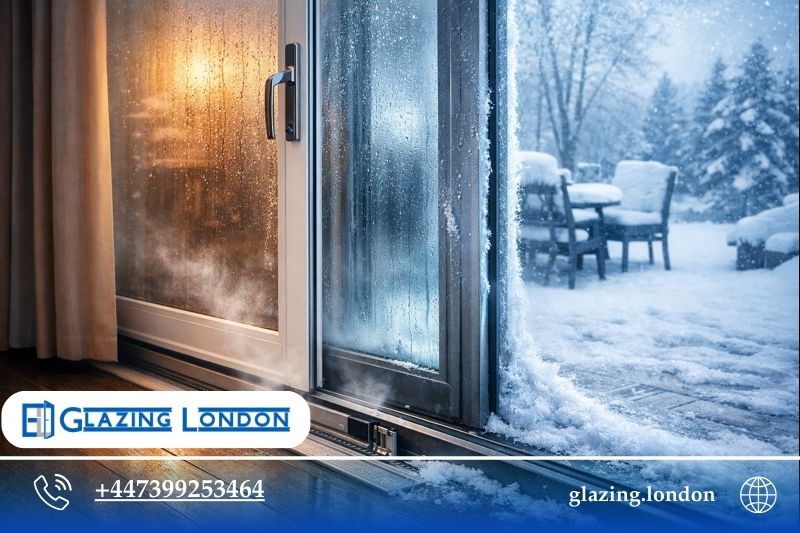
Introduction: Winter Is the Ultimate Stress Test for Sliding Patio Doors
Sliding patio doors are designed to blur the line between indoor comfort and outdoor living . In theory , they should perform reliably year-round . In practice , winter exposes every hidden weakness in their design , installation , and long-term maintenance .
Cold air infiltration , condensation , stiff operation , cracked frames , failed seals , and even security vulnerabilities often emerge only when temperatures drop .
From a glazing contractor’s perspective , winter failures are rarely “sudden .” They are the result of cumulative weaknesses that become impossible to ignore once thermal stress , moisture , and contraction come into play .
This article explains why sliding patio doors fail during winter , what the most common technical root causes are , and—most importantly—how we professionally reinforce them to withstand harsh winter conditions without compromising aesthetics or usability .
Glazing London
1 . Thermal Stress: The Silent Enemy of Sliding Doors
Winter introduces extreme temperature differentials between interior and exterior environments . A heated interior may sit at 20–22°C , while exterior temperatures fall close to freezing or below . That difference creates thermal stress across the door assembly .
What happens during thermal stress?
- Aluminum and uPVC frames contract at different rates
- Glass units respond differently to temperature change than frames
- Fixings and fasteners loosen microscopically
- Gaskets lose elasticity
Over time , this leads to:
- Warped tracks
- Hairline gaps between sash and frame
- Reduced airtightness
- Increased friction during sliding
Why sliding doors are more vulnerable than hinged doors
Unlike hinged doors , sliding systems rely on:
- Long horizontal tracks
- Continuous seals across wide spans
- Precision tolerances
Even a 1–2 mm distortion can significantly affect performance .
French doors installation London
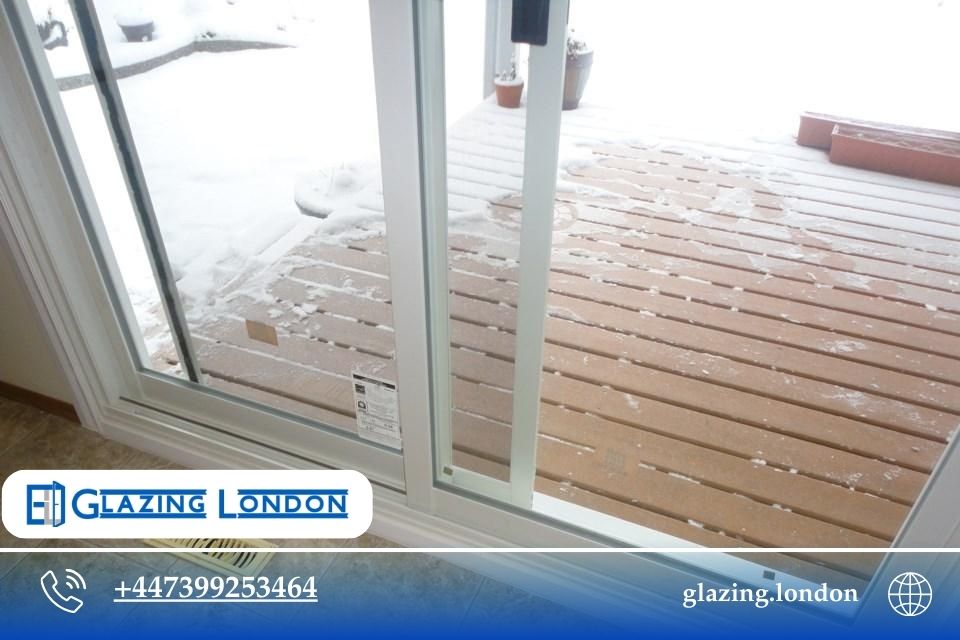
Door Installation in London
2 . Failed or Inadequate Weather Seals
One of the most common winter complaints is cold draughts , even when the door appears fully closed .
Root causes of seal failure
- Aging brush seals that harden over time
- Low-grade rubber gaskets that lose flexibility in cold weather
- Poor original installation where seals were compressed unevenly
- UV degradation from years of sun exposure
Winter-specific impact
In cold conditions:
- Rubber stiffens and shrinks
- Seals stop rebounding after compression
- Micro-gaps open , allowing air infiltration
The result is not only discomfort , but higher heating bills and localized condensation .
Bifold Door Installation London
3 . Condensation and Moisture Ingress
Condensation on sliding patio doors is often mistaken for a glazing defect . In reality , it is a symptom of thermal imbalance .
Why condensation worsens in winter
- Warm , moist indoor air meets cold glass surfaces
- Poorly insulated frames act as cold bridges
- Failed double or triple glazing loses its insulating gas
Warning signs
- Water pooling on the track
- Mold growth around frame edges
- Damp patches on adjacent flooring
- Fogging between glass panes (seal failure)
If left unaddressed , moisture ingress can lead to:
- Rot in timber subframes
- Corrosion of steel reinforcements
- Permanent damage to floor finishes
Composite Door Installation in London
4 . Track and Roller Failure in Cold Conditions
Sliding doors depend heavily on roller systems . Winter accelerates wear in several ways .
Common winter-related roller issues
- Metal rollers contract , reducing tolerance
- Lubricants thicken or freeze
- Dirt and moisture combine into abrasive sludge
- Ice formation inside external tracks
Resulting problems
- Doors become difficult or impossible to slide
- Rollers flatten or crack under uneven load
- Tracks deform due to pressure concentration
Many winter “jammed door” callouts are actually roller failures that were already developing months earlier .
Front Door Installation London
5 . Poor Original Installation Revealed by Winter
Winter is unforgiving to installation shortcuts .
Typical installation faults exposed by cold weather
- Inadequate frame packing
- Lack of thermal breaks under thresholds
- Incorrect perimeter sealing
- Frames installed out of square
In warmer months , these issues remain hidden . In winter:
- Expansion gaps disappear
- Frames twist under load
- Seals disengage unevenly
This is why many homeowners experience problems only after the first or second winter following installation .
6 . Structural Movement and Building Settlement
Buildings naturally move over time . Winter accelerates this movement due to:
- Soil contraction
- Differential foundation movement
- Thermal cycling of structural elements
Sliding patio doors , due to their width , are particularly sensitive to even minor shifts . A few millimeters of movement can:
- Knock the door out of alignment
- Cause uneven load on rollers
- Break airtight seals
Stable Door Installation London
7 . Security Weaknesses That Appear in Winter
Cold weather affects not just comfort , but security .
Winter-related security risks
- Shrinking frames reduce lock engagement depth
- Warped sashes prevent full locking
- Old multipoint locks seize due to cold
- Weak glazing becomes brittle in freezing temperatures
A door that “technically locks” may no longer meet real security standards once winter sets in .
8 . How We Reinforce Sliding Patio Doors for Winter Performance
8 .1 Comprehensive Winter Inspection
Before reinforcing , we perform a full diagnostic:
- Thermal imaging to detect cold bridges
- Seal compression testing
- Track level measurement
- Roller load assessment
- Lock engagement analysis
This allows targeted reinforcement rather than cosmetic fixes .
8 .2 Upgrading to High-Performance Sealing Systems
We replace degraded seals with:
- Cold-resistant EPDM gaskets
- Multi-layer brush and rubber hybrid seals
- Continuous perimeter sealing systems
These remain flexible even in sub-zero temperatures and maintain airtightness under movement .
8 .3 Reinforcing Frames with Thermal Break Technology
Where feasible , we:
- Install thermal break liners inside aluminum frames
- Add insulated packers beneath thresholds
- Upgrade spacer systems in glazing units
This dramatically reduces condensation risk and heat loss .
8 .4 Roller and Track Reinforcement
Our approach includes:
- Replacing nylon or steel rollers with load-rated composite rollers
- Installing sealed bearing systems
- Re-profiling or replacing distorted tracks
- Applying winter-grade lubricants
This restores smooth operation even in freezing conditions .
8 .5 Glass Unit Upgrades
If glazing is underperforming , we reinforce by:
- Upgrading to low-E double or triple glazing
- Using warm-edge spacers
- Increasing glass thickness for rigidity
This improves both insulation and security .
8 .6 Structural Re-Alignment and Load Distribution
For doors affected by building movement:
- Frames are re-packed and re-aligned
- Load is redistributed evenly across rollers
- Expansion allowances are corrected
This prevents recurring winter failures .
8 .7 Security Reinforcement
We reinforce winter security by:
- Adjusting multipoint locking systems
- Upgrading lock cylinders
- Adding anti-lift mechanisms
- Reinforcing glazing with laminated safety glass
Double Glazing Door Installation in London
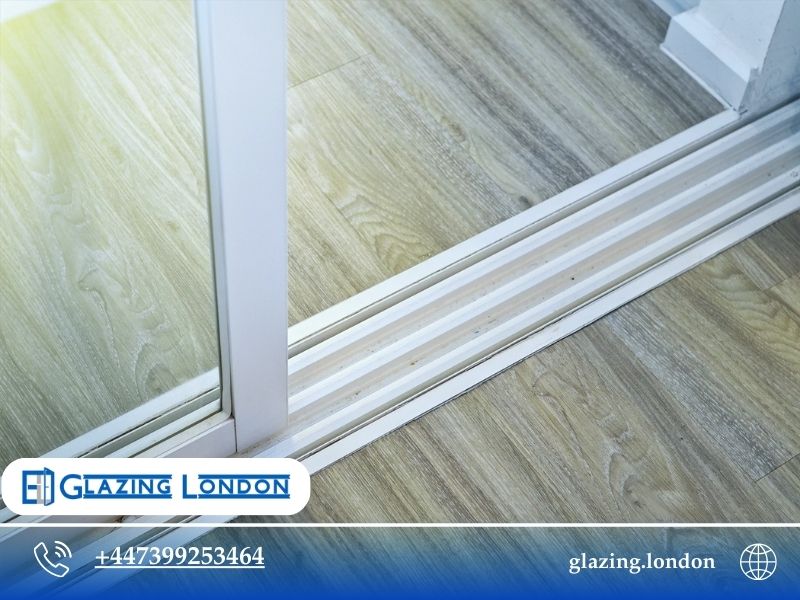
Sliding Patio Door Installation London
9 . Preventive Winter Maintenance Checklist
To avoid future failures:
- Annual seal inspection before winter
- Track cleaning and lubrication
- Lock testing in cold conditions
- Condensation monitoring
- Early roller adjustment
Preventive maintenance costs a fraction of emergency winter repairs .
10 . Why Reinforcement Beats Replacement
Many homeowners assume winter problems mean full replacement . In reality:
- Over 70% of winter sliding door failures are repairable with reinforcement
- Targeted upgrades extend lifespan by 10–15 years
- Reinforcement preserves original aesthetics
- Cost is significantly lower than full replacement
Sliding Patio Door Repair London
Conclusion: Winter-Proofing Sliding Patio Doors Is an Investment
Winter does not create sliding patio door problems—it reveals them . Cold temperatures , moisture , and structural stress expose weaknesses that already exist beneath the surface .
By understanding why sliding patio doors fail during winter and applying professional reinforcement strategies , homeowners can restore performance , comfort , and security without unnecessary replacement .
A properly reinforced sliding patio door should:
- Remain airtight
- Operate smoothly
- Resist condensation
- Maintain security
- Perform consistently year-round
Winter should test your doors—not defeat them .